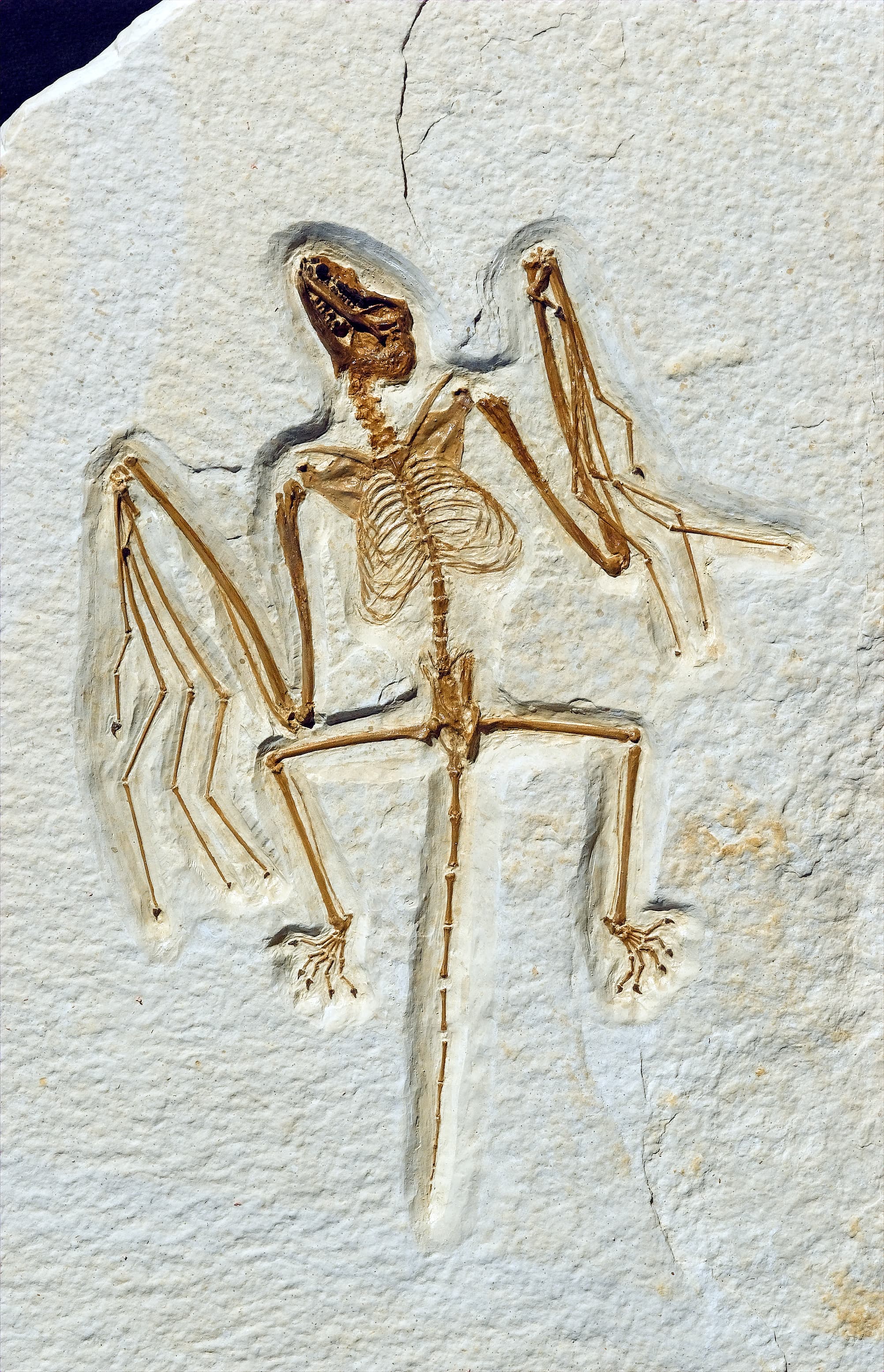
Photo: National Park Service, Fossil Butte National Monument
- Order
- Chiroptera
- Family
- Onychonycteridae
Currently the most primitive bat known — a link between modern bats and their non-flying ancestors.
It is unusual to find bat fossils consisting of more than isolated teeth or bone fragments. The Fossil Butte Member and an Eocene deposit in Messel, Germany host the most complete bat fossils in the world. So far, none of the FBM bat species have been found anywhere else in the world.
O. finneyi has claws on each of its 10 wing digits, unlike other extinct and living bat species. These claws suggest that this species, using all four limbs, would have been an excellent climber. Ear morphology suggests it did not use echolocation to track prey such as insects, though the trait may have been used to sense trees or hills — and that it may have been diurnal rather than nocturnal.
Species text: National Park Service, Fossil Butte National Monument — Fossil Mammal Species.