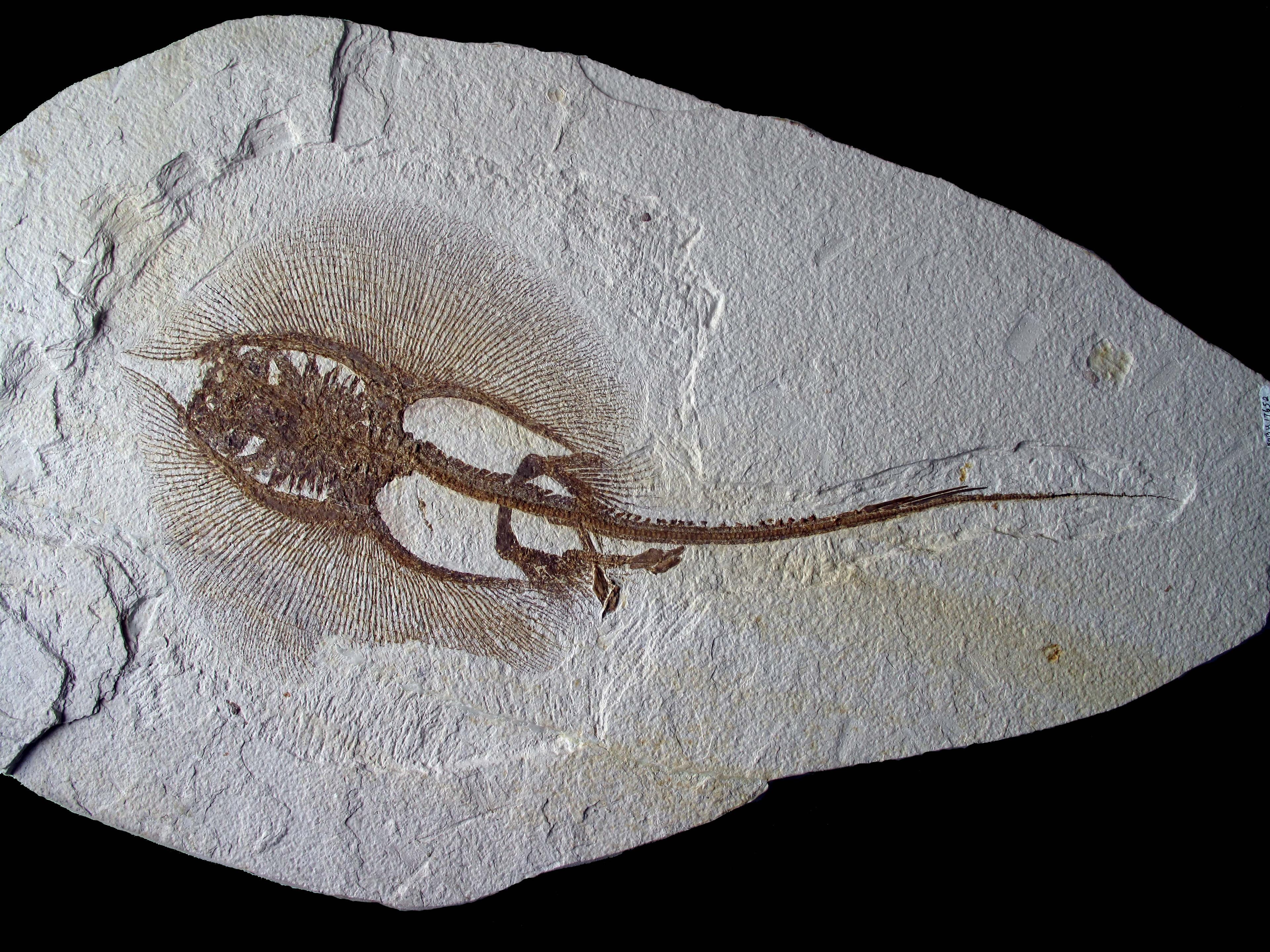
Photo: National Park Service, Fossil Butte National Monument
- Order
- Myliobatiformes
- Family
- Heliobatidae
- Size
- Up to about 44.2 cm / 17.4 in
One of two freshwater stingray species known from the Fossil Butte Member.
As stingrays have cartilaginous skeletons (lacking bones), it is uncommon to find more than their teeth or stings fossilized. Currently, the Fossil Butte Member is the only place in the world where articulated (complete) freshwater stingray fossils have been discovered.
Due to the number of specimens that have been found, from unborn embryos to adults, the life cycles of the ancient species can be studied. Male stingrays can be identified by the claspers, male reproductive structures, located at the base of the tail.
There are almost 200 modern stingray species. Most are bottom-dwellers and feed on bottom-dwelling invertebrates, such as shrimp and crayfish. Stingray fossils are found in association with these invertebrates, indicating their ancient diet was similar to their modern relatives'. Modern freshwater stingrays are found in tropical river systems of South America, Asia, Africa, and Australia.
Species text: National Park Service, Fossil Butte National Monument — Fossil Fish Species.