Photo: National Park Service, Fossil Butte National Monument
- Order
- Acipenseriformes
- Family
- Polydontidae
- Size
- Up to about five feet
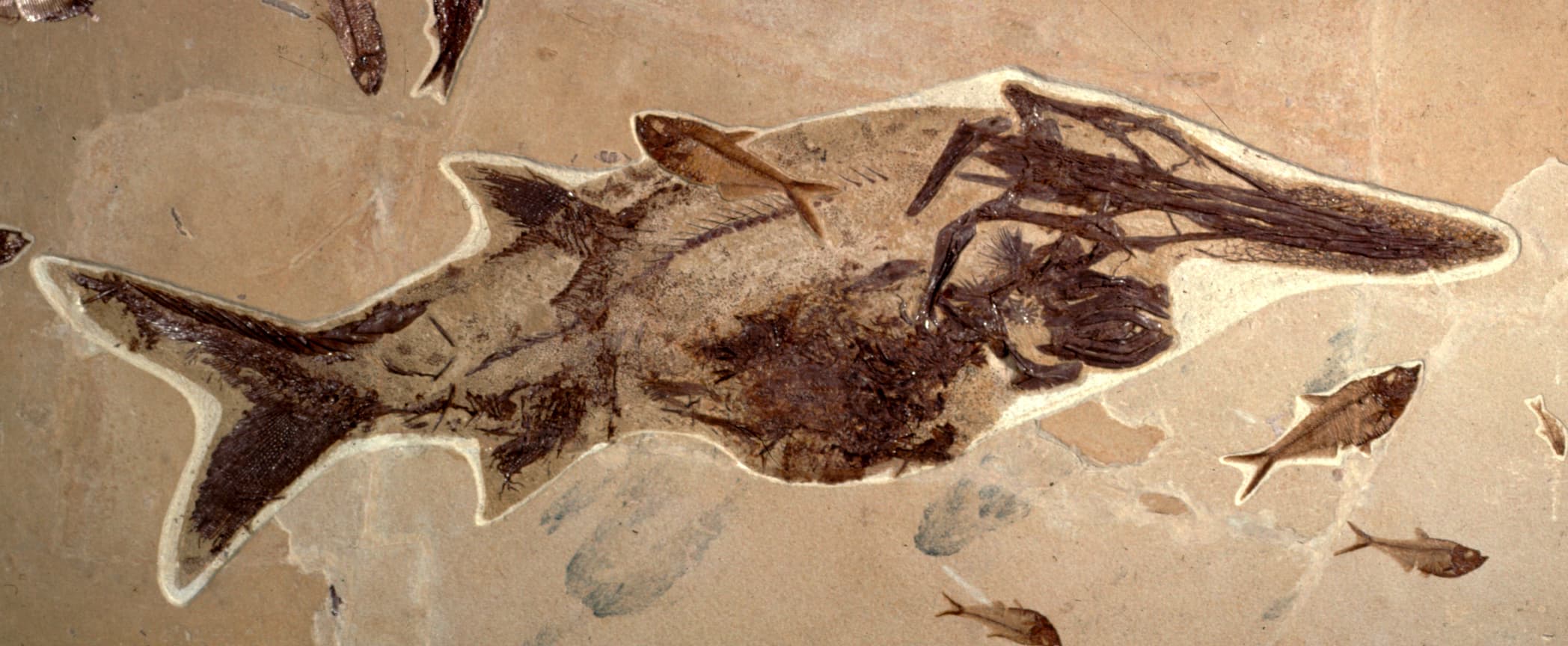
A predatory paddlefish often preserved with fish in its stomach.
C. magnicaudatus is often preserved with fish in the stomach, indicating this species was a predator. This fossil species is most commonly found in shallow-water deposits, but very few juveniles have been discovered. This could indicate that C. magnicaudatus matured and spawned in connecting rivers before migrating to Fossil Lake as an adult.
This species' name, crossopholis, meaning 'fringed scale,' comes from the thousands of tiny, fringed scales covering its body. C. magnicaudatus reaches a maximum of five feet in length.
Both modern paddlefish and C. magnicaudatus' snouts, or paddles, are lined with electroreceptor organs that allow them to navigate in dark or cloudy waters. There is one living species of paddlefish, Polyodon spathula, found only in North America.
Species text: National Park Service, Fossil Butte National Monument — Fossil Fish Species.